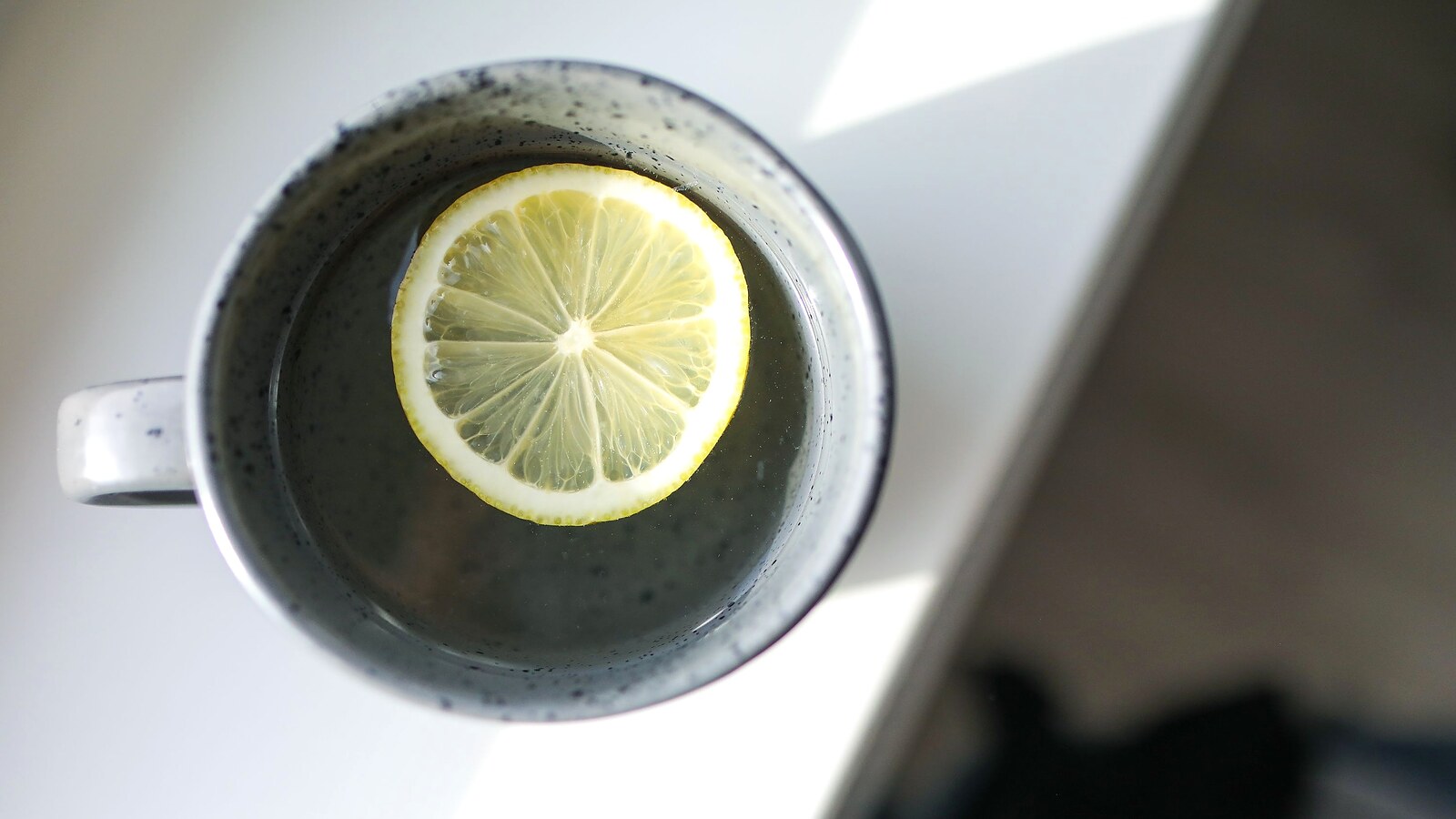
The claims are familiar enough to recite. Lemon water alkalises the body, flushes out toxins, boosts metabolism, strengthens immunity, and does something unspecified but favourable to digestion.
One of those has a research file. It is not the one you would guess, the file is much thinner than its reputation, and the drink has a documented cost that almost nobody mentions.
The alkalising claim has essentially no research at all
In 2016 two researchers set out to review the evidence connecting dietary acid load and alkaline water to cancer — the strongest version of the alkalising claim, and the one used to sell the most.
They screened 8,278 citations. They reviewed 252 abstracts. Exactly one study met their inclusion criteria, and it was a cohort study finding no association between dietary acid load and bladder cancer. They found no randomised trials at all, and nothing whatsoever on alkaline diet or alkaline water as a cancer treatment.
Their conclusion was that promoting these ideas to the public is not justified — not because the evidence is negative, but because there is almost none in either direction.
There is also a physiological problem the marketing sails past. Blood pH is held near 7.4 by the kidneys and the lungs, continuously and with considerable force. A drink does not move it. If something did move it, you would not feel invigorated; you would be seriously unwell.
What “no evidence” means here
A review finding one eligible study out of 8,278 citations is not the same as a review finding an effect of zero. It means the question has barely been studied, which is a different and in some ways worse situation.
What can be said with confidence is narrower and comes from physiology rather than trials: systemic blood pH is tightly regulated, and no ordinary beverage alters it. Urine pH does change with diet. That is a real effect, and it is the one the next section turns out to depend on.
The vitamin C is real and small
Raw lemon juice contains 38.7 mg of vitamin C per 100 g, according to the USDA’s reference data. That is a genuinely good concentration for a fruit juice.
It is also being measured per 100 grams, and nobody drinks 100 grams of lemon juice. Half a lemon yields something in the region of 15 to 20 grams, which puts a glass of lemon water at roughly 6 to 8 mg of vitamin C — under a tenth of the daily requirement for an adult.
That is not nothing. It is also not an immune strategy, and describing it as a boost requires ignoring the size of the number.
The one claim with a real study behind it
Citrus juices are a dietary source of citrate, and citrate is a naturally occurring inhibitor of crystal formation in urine. Some people who form calcium kidney stones have low urinary citrate — a condition called hypocitraturia — and the standard treatment is prescribed potassium citrate.
Lemon juice has the highest citric acid concentration of the common juices. A 2008 analysis using ion chromatography measured it at 1.44 g per ounce, with lime just behind at 1.38.
0.03–0.22
Grams of citric acid per ounce in commercially available lemonades and juice products, against 1.44 g/oz in lemon juice itself. The bottled version of the drink is not a weaker form of the same thing; on an ounce-for-ounce basis it can carry a fraction of the active ingredient.
So the mechanism is real and the ingredient is genuinely concentrated in lemons. The question is what happens in actual patients, and that is where the file gets thin.
Eleven patients, and the outcomes that mattered were not significant
The study everyone is ultimately citing is a 2007 retrospective review from Duke. Thirty-two patients had been on long-term lemonade therapy for hypocitraturic stone disease; eleven met the criteria for evaluation, and were compared with eleven age- and sex-matched patients on potassium citrate.
Read the results carefully, because the popular version stops halfway.
Ten of the eleven on lemonade showed increased urinary citrate, averaging +383 mg per day (p < 0.05). All eleven on potassium citrate increased, averaging +482 mg per day (p < 0.0001). So the biochemistry moved, and it moved less, and less consistently, than the drug it was being compared with.
Then the outcomes people actually care about. Mean stone burden went from 37.2 to 30.4 mm² — p > 0.05. Stone formation rate fell from 1.00 to 0.13 stones per patient per year — p > 0.05. Neither reached statistical significance.
The authors’ own conclusion is precise and much more modest than its afterlife: lemonade therapy “appears to be a reasonable alternative for patients with hypocitraturia who cannot tolerate first line therapy,” and a prospective randomised trial is needed to validate the findings. That trial has not arrived.
None of which makes it a health drink. It makes it a second-line option for a specific diagnosed metabolic abnormality, established on eleven people, with the outcome measures unproven — and it is a clinical decision, not a kitchen one.
The cost that gets left out
Lemon water has a documented downside, and it is the one thing in this whole subject where the evidence is not thin.
Citric acid erodes dental enamel, and in the comparative testing lemon juice ranks among the most erosive drinks measured. What matters, though, is not simply that it is acidic — it is how people drink it.
A British Dental Journal review of diet and tooth wear identifies frequency of acid exposure, particularly between meals, as the predominant risk factor, and notes that sipping slowly, swishing, or holding an acidic drink in the mouth before swallowing increases the risk further.
That is an unusually exact description of how lemon water is consumed: acidic, sipped over a long period, often on an empty stomach first thing in the morning, every day. The ritual that makes it feel healthy is the part that does the damage.
- Keep drinking it if you like it. The strongest honest case for lemon water is that flavour makes some people drink more water than they otherwise would, and that is a real benefit even though it is a boring one.
- Drink it quickly rather than sipping it for an hour. Exposure time and frequency are the measured risk factors for erosion, not the existence of the acid.
- Use a straw, and rinse with plain water afterwards. Both reduce contact between the acid and your enamel, which is the mechanism actually at issue.
- Do not brush straight afterwards. Enamel is softened immediately after an acid exposure. Wait.
- If kidney stones are the reason you are doing this, that is a conversation with a doctor. Hypocitraturia is diagnosed with a urine test, the first-line treatment is prescribed, and the lemonade evidence is eleven retrospective patients.
Notice that four of those five are about protecting your teeth from the drink, which is a strange list to end up with for something marketed as a wellness practice.
Try this
If the morning glass of lemon water is a habit you value, keep the habit and change the drink for two weeks: same glass, same time, same ritual, plain water.
Then ask what actually changed. For most people the answer is nothing, which identifies what was doing the work — the hydration and the routine, both of which survive without the lemon.
If you find you drink noticeably less water without the flavour, that is a real finding about you, and the lemon is earning its place. Just drink it faster.
The parts of this that are genuinely hard
Proving that something does nothing is much harder than proving it does something, and most of the claims here have not been tested rather than tested and failed. That is a genuine limit on how strongly anyone can speak, and it applies to this article too.
The erosion evidence is also largely laboratory work — enamel samples in acid — plus observational studies of people who consume acidic drinks frequently. That is a solid basis for the mechanism and a weaker one for predicting what any individual’s daily glass does over twenty years.
And the honest position on the kidney-stone finding is uncomfortable for both sides of the argument. It is not nothing: the citraturic effect was real and statistically significant. It is also not a result about stones, because the stone measures did not reach significance in a study of eleven people. Anyone using it to sell you a wellness habit has read the first half.
The bottom line
Lemon water does not alkalise you, cannot detoxify anything, and delivers under a tenth of a day’s vitamin C. Its one evidence-backed use is a second-line option for a diagnosed metabolic condition, established retrospectively on eleven patients, with the outcomes that matter statistically unproven.
What it reliably is, is water with flavour in it — which is a perfectly good reason to drink it, and no reason at all to sip it slowly.
Sources (5)
Every factual claim in this article comes from one of these sources.
- Long-Term Lemonade Based Dietary Manipulation in Patients With Hypocitraturic Nephrolithiasis
- Quantitative Assessment of Citric Acid in Lemon Juice, Lime Juice, and Commercially-Available Fruit Juice Products
- Systematic review of the association between dietary acid load, alkaline water and cancer
- The role of the diet in tooth wear
- Lemon juice, raw — FoodData Central, FDC ID 167747
Keep exploring
Continue reading
Deeper into what you just read.


Explore more
Adjacent ground, if this was useful.


One thing worth knowing
A surprising finding. The evidence behind it. And what it means for your life. BetterYou+ sends one useful idea at a time—nothing to keep up with.