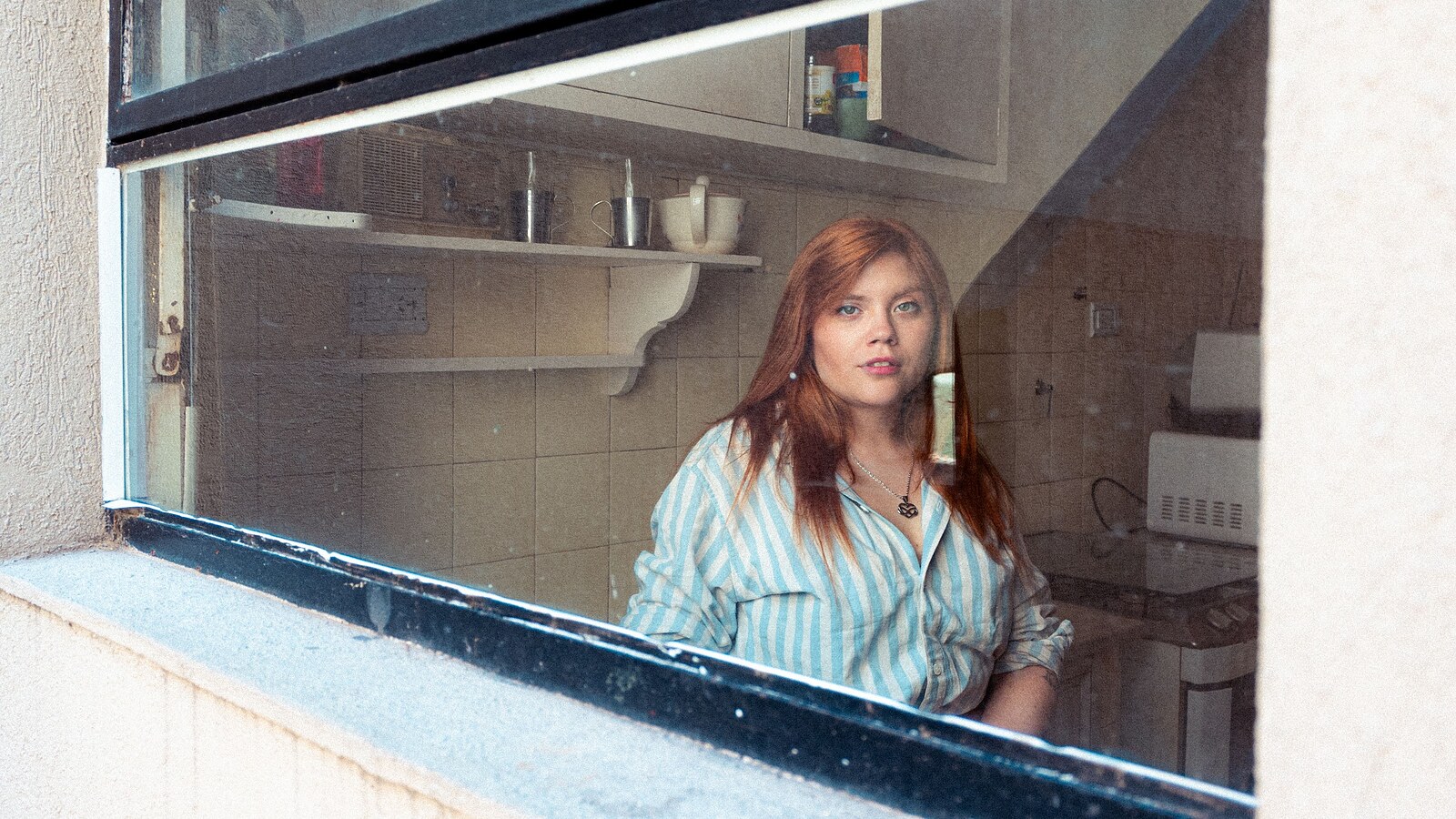
There is a particular kind of tiredness that sleep does not touch. You get the eight hours, or something close to it, and you wake up already depleted — not by anything that happened, but by the day ahead and the fact that it is yours to run.
Most parents feel a version of that sometimes. It is not, on its own, a condition. But there is a point at which it stops behaving like ordinary exhaustion, and researchers have spent about fifteen years establishing that the point is real, measurable, and different from the things it gets mistaken for.
What it is, and the three things it is not
Parental burnout has a specific shape. Isabelle Roskam and Moïra Mikolajczak, the Belgian researchers who have done most of the work on it, describe three components: exhaustion in the parental role, an emotional distancing from your own children, and a loss of the sense that you are any good at this.
The middle one is the tell. Ordinary tiredness makes you slower. This makes you flatter. Parents describe going through the routine correctly — meals made, homework supervised, bedtime kept — while feeling almost nothing while doing it. The word that comes up is automatic.
What this is not
It is not ordinary parenting stress. Being worn out by a hard fortnight is not a syndrome, and nothing here is an argument for treating normal exhaustion as a diagnosis.
It is not depression. In two studies covering 3,482 participants, items measuring parental burnout loaded on a different factor from depressive symptoms. Depression follows you everywhere; parental burnout is specific to the parental role, and people who have it often feel fine at work.
It is not job burnout. Same research, same finding. The two share some consequences — disrupted sleep, problematic drinking, physical complaints — but they are separate constructs with separate profiles.
How common it is, and why that number is slippery
In 2021 a collaboration of hundreds of researchers measured it in 42 countries at once: 17,409 parents, 12,364 of them mothers, all completing the same 23-item instrument.
The prevalence they found ranged from 0.0 per cent to 9.8 per cent depending on the country.
0–9.8%
The range of parental burnout prevalence across 42 countries, using the same questionnaire and the same threshold. Cuba, Pakistan, Thailand and Turkey were at the bottom; Belgium was at the top.
That spread is the most useful thing in the study, and it is also the reason to be careful with any single figure you see quoted. A prevalence number is a product of three things: the population sampled, the instrument used, and where the threshold was drawn. Move the cutoff from 86 to 92 and the same dataset gives a different table, with the United States rather than Belgium at the top.
How to read a prevalence figure
These were parents who volunteered to complete an online questionnaire, which is not the same as a random sample of all parents. The researchers say so themselves.
What the study establishes well is the comparison — the same instrument, the same threshold, applied in 42 places at once. What it cannot tell you is your own probability of anything.
The finding that changes what it means
The obvious explanations for a country-level difference are the material ones: money, childcare hours, how many children, how much support the state provides. The researchers tested those.
The strongest country-level predictor was none of them. It was individualism — how much a culture treats a person as a self-contained unit responsible for their own outcomes. It outperformed economic inequality, and it outperformed every individual and family characteristic examined, including the number and ages of the children and the hours spent with them.
That finding does two things. It undercuts the idea that burnout is a measure of how much a parent loves their children, which is the fear that keeps most people from mentioning it. And it relocates part of the cause outside the household — into a set of expectations about what a parent is supposed to manage alone.
What actually shifts the balance
Mikolajczak and Roskam’s model is deliberately unglamorous. They call it the balance between risks and resources: burnout develops when the demands of parenting chronically outweigh what a parent has available to meet them. Not one catastrophic demand. The accumulation.
The practical consequence is the useful part. If it is a balance, then it moves from either side, and several small changes are worth as much as one large one you cannot make.
- Find the risk you can actually name. The ones the research weights heavily are specific: perfectionism about parenting, an absent or unsupportive co-parent, and a load of demands with no time attached to them. Vague overwhelm is hard to act on; one named demand is not.
- Subtract something small and real. One recurring obligation, one standard you set yourself, one evening a week. The model says a few of these together do the work of one big change — which matters, because the big change is usually the one that is not available.
- Add a resource, not a technique. Time that is genuinely yours, another adult who takes a task rather than advising on it, or a regular hour that nobody negotiates with you about.
- Say it out loud to one person. The emotional distancing is the part people conceal hardest, because it feels like evidence of something shameful rather than a symptom with a name.
- Treat persistence as the signal. A bad fortnight is a bad fortnight. Months of feeling automatic with your own children is the thing this research is about, and it is worth taking to a GP or a therapist — not as a confession, as a description.
Try this
For one week, write down the demand that felt heaviest each day. One line, no analysis.
Most parents find the list is shorter and more repetitive than the feeling suggested — the same two or three things, most days. That is not a small finding. A diffuse sense of being overwhelmed cannot be negotiated with. Three named recurring demands can be, and one of them is usually more moveable than it looked from inside the week.
The parts of this that are genuinely hard
The consequences research is uncomfortable and worth stating plainly, because the alternative is a reassuring article that leaves out the reason anyone studies this. Following parents over a year, across two samples of around 900 and 800, the researchers found parental burnout substantially increased escape ideation — the thought of leaving — along with neglectful and violent behaviour toward children. The effects were large.
That is a statement about a syndrome’s trajectory, not a prediction about you, and it is precisely why the distinction from ordinary exhaustion matters rather than being academic. Something with that much downstream weight deserves a name and a threshold instead of being absorbed into the general noise of being tired.
The second hard part is that the resources side of the balance is not equally available to everyone. A parent with an involved partner, flexible work and money for help has more levers than a parent without them, and no amount of naming demands changes that. The individualism finding cuts both ways: it says the pressure is partly cultural, and it also says the fix is not purely personal.
The bottom line
Parental burnout is not a measure of how much you love your children, and it is not the ordinary tiredness of a hard week. It is a specific, measurable state — exhaustion in the role, emotional distance from the children, and a collapsed sense of competence — that persists, that is distinct from depression and from job burnout, and that responds to the balance between what parenting demands and what a parent has to meet it with.
If the flatness is the part you recognise, that is the part worth saying to someone. It is the symptom people hide hardest and the one most likely to be misread, by a parent, as a verdict on themselves. If it has lasted, talk to a clinician who can tell burnout from depression — this article can describe the difference between them, and it cannot tell you which one you have.
Sources (4)
Every factual claim in this article comes from one of these sources.
Keep exploring
Continue reading
Deeper into what you just read.


Explore more
Adjacent ground, if this was useful.


One thing worth knowing
A surprising finding. The evidence behind it. And what it means for your life. BetterYou+ sends one useful idea at a time—nothing to keep up with.